
Solana DvP: A Practical Guide to Atomic Settlement for Banks
In brief
Current as of 2026-10-07.
- Solana Foundation, the Zug-based non-profit responsible for the Solana network, announced Solana DvP in October 2026.
- The program is an open-source escrow system that gives financial institutions an open-sourced API for delivery-versus-payment settlement on Solana, released under the MIT license.
- The stated aim is to bring the settlement certainty that banks and other financial institutions require to public blockchain infrastructure as a reusable standard that is atomically settled, provides isolated escrow and enforces deadlines.
What changed

Solana Foundation, the Zug-based non-profit responsible for the Solana network, announced Solana DvP in October 2026. The program is an open-source escrow system that gives financial institutions an open-sourced API for delivery-versus-payment settlement on Solana, released under the MIT license. The stated aim is to bring the settlement certainty that banks and other financial institutions require to public blockchain infrastructure as a reusable standard that is atomically settled, provides isolated escrow and enforces deadlines.
The mechanism matters because it changes where settlement risk sits. In conventional securities settlement, delivery-versus-payment is achieved through a multi-day chain of clearinghouses, depositories and custodians that can tie up capital for one to two days. Solana DvP is designed to compress that process into a single atomic transaction: both legs settle together, or neither does, with finality in seconds rather than days. Until now, institutional trades settling onchain have typically relied on bespoke smart contracts. Solana DvP replaces that with one standard rail.
Section source: Solana Foundation Launches Solana DvP, an Atomic Settlement Program Built for Financial Institutions | Solana Media
The program supports SPL Token and Token-2022, including extensions regulated issuers depend on such as permanent delegate, pausable tokens and transfer hooks. Any two counterparties can use it with any settlement agent, whether a bank, a custodian or an exchange. Solana Foundation states that the program has undergone external security audits and is ready for use with real funds, while also noting that privacy features are planned so trade settlements can be made private and confidential. The Foundation is welcoming design partners and early participants ahead of the production release.
J.P. Morgan's role deserves careful reading. The bank provided Solana Foundation with input on institutional settlement practices and requirements. The announcement's disclaimer is explicit: J.P. Morgan's involvement was limited to providing input regarding securities settlement practices and should not be construed as designing, developing, operating, approving, certifying, warranting, endorsing or guaranteeing Solana DvP or its performance in any way. Independent coverage has framed the launch as an institutional settlement standard developed with J.P. Morgan input, positioning it as a reusable open rail rather than the bespoke smart contracts institutions have previously used for onchain trades.
Section source: Solana Debuts Institutional Settlement Standard With J.P. Morgan Input - Decrypt
Why it matters
For banks and asset managers, the core evaluation question is not whether atomic settlement works technically — it is how it interacts with existing post-trade workflows, custody arrangements and compliance obligations. The program's design choices create both opportunities and constraints that treasury, operations and compliance teams need to assess together.
The most significant reported constraint is funding. According to CryptoSlate, Solana DvP requires 100% upfront cash for every trade. Under the published design, both escrow legs must be fully funded before a settlement authority can execute the bilateral exchange. The program explicitly excludes netting — the process of offsetting obligations before paying the remaining balance. A buyer must arrange the cash token, a seller must arrange the asset token, and any financing relationship sits outside the DvP program. This means institutions may benefit from a shorter wait for proceeds, while still needing to source the full amount for every trade they submit.
Section source: Solana DvP settlement requires 100% upfront cash for every trade
This is a meaningful difference from how many institutions currently manage settlement liquidity. In traditional netting arrangements, offsetting obligations can reduce the amount that needs to move in the first place. Solana DvP does not perform that calculation across trades. Institutions that need netting or credit must arrange those functions elsewhere before deciding how much to send to their escrows. The economic responsibility remains with the participants and whoever finances them.
The atomic exchange protects principal delivery risk within the token exchange: neither side hands over its agreed leg without the other leg also moving. But the broader financial relationship still depends on the instruments being exchanged. A cash token carries its issuer's credit and redemption risks, and a regulated asset token can retain controls that affect transfers. Freeze, pause and permanent-delegate powers remain relevant while tokens sit in escrow. A fully funded trade can still fail to complete, and refunds can depend on issuer cooperation.
Privacy is another open item. Solana Foundation states that privacy features are planned so trade settlements can be made private and confidential, but they are not available at launch. For institutions operating under confidentiality obligations — whether toward clients, counterparties or regulators — the absence of production privacy features at launch is a material consideration. The Foundation's own disclaimer also notes that it has not conducted extensive or approved legal analysis regarding the permissibility or regulatory status of the matters discussed, and that no aspect of the materials has been approved or endorsed by the U.S. Securities and Exchange Commission or any other regulator.
Section source: Solana Foundation Launches Solana DvP, an Atomic Settlement Program Built for Financial Institutions | Solana Media
IT Finance perspective: what this means in practice
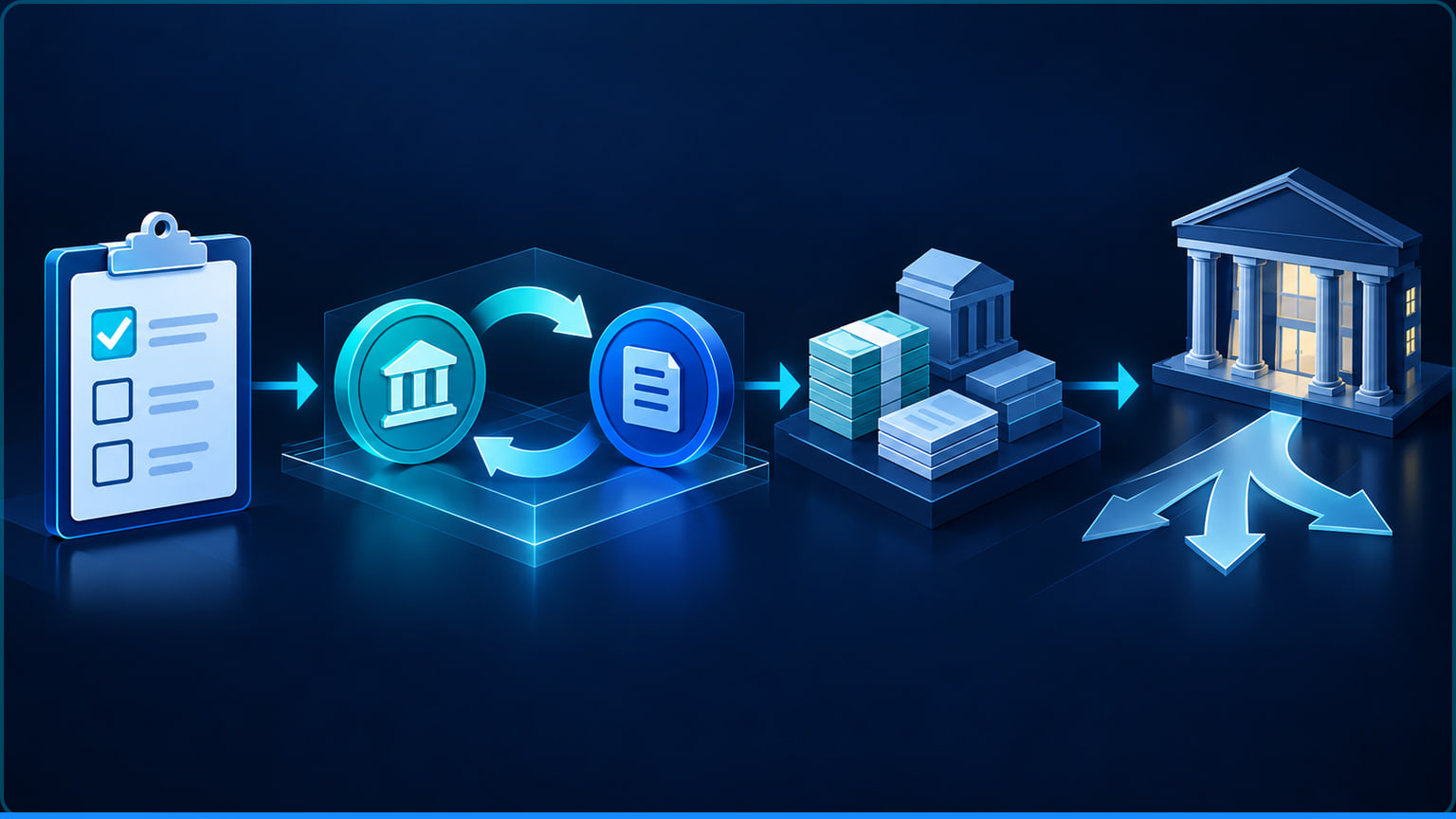
From an implementation standpoint, Solana DvP is best understood as a settlement primitive rather than a complete post-trade solution. It provides a defined atomic exchange: both agreed token legs move together, or neither does. Turning that exchange into a capital-saving service still depends on the cash, assets and financing surrounding it. That distinction should shape how institutions scope any pilot or evaluation.
The 100% upfront funding requirement is the first decision criterion. Teams should model gross funding against current netting arrangements. The question is not simply whether atomic settlement is faster — it is whether the reduction in settlement duration offsets the increase in gross liquidity requirements. A participant that receives usable cash or assets sooner may be able to put them into a subsequent trade sooner, which could reduce how long it needs external financing or how much liquidity it holds against a sequence of obligations. But the benefit depends on when funding is required and when the proceeds can actually be used. The announcement provides no measured capital-saving result or total-cost comparison, so institutions should build their own.
Section source: Solana DvP settlement requires 100% upfront cash for every trade
Custody and token controls are the second criterion. The program supports Token-2022 extensions such as permanent delegate, pausable tokens and transfer hooks — features that regulated issuers depend on. But those same controls remain active while tokens sit in escrow. An issuer that freezes an escrow or blocks transfers can prevent a fully funded trade from completing. Refunds and reclaims return to the named party's token account even when a custodian supplied the deposit, and the refund route may differ from the funding route. Custody teams should map these flows explicitly before committing assets.
The third criterion is governance and audit assurance. The Foundation's documentation lists an upgradeable program on mainnet-beta and devnet, with an upgrade authority — an address with the power to change the deployed program. Institutions depend on that governance and on the settlement rules. Security reviewer Cantina's May 21–28 audit covers an earlier repository and specific fixes: four medium findings are marked fixed, while three low-risk and six informational findings are acknowledged. Documented deployment and an earlier audit do not establish live commercial adoption or a verified match with current deployed code. For institutions, the useful next evidence would connect actual settlement use with the amount and duration of funding, the financing cost, and whether proceeds become spendable sooner.
Finally, legal finality is a separate question from technical finality. The documentation tells operators to recognize settlement when the transaction reaches Solana's finalized commitment. Whether that also constitutes legally final settlement depends on the parties' agreements and applicable regimes. This is not a detail to resolve after integration; it is a precondition for using the program with real funds.
What to do next
1. Map one real trade flow end to end. Choose a single, low-complexity bilateral trade and document where cash is sourced, where the asset is held, who signs as settlement authority, and what happens if the issuer freezes the token mid-flight. This exercise will surface the gaps between the atomic exchange and your existing post-trade process faster than any vendor briefing.
2. Model gross funding against your current netting. Quantify the liquidity difference between 100% upfront funding per trade and your existing netting or credit arrangements. Include the timing of usable proceeds. If the model shows a material increase in gross liquidity requirements, that is a board-level discussion, not an engineering one.
3. Review the audit trail and governance. Read the published audit findings, note the repository revision covered, and confirm whether the deployed program matches the audited code. Ask who holds the upgrade authority and under what conditions it can change settlement rules. If the answer is not documented to your satisfaction, treat the program as pre-production for your purposes.
4. Engage with legal and compliance before any pilot. Confirm how technical finality on Solana maps to legal finality in your jurisdiction, and whether the absence of production privacy features at launch conflicts with confidentiality obligations. If you need support evaluating token standards, custody integration or smart-contract security for an institutional settlement pilot, IT Finance's blockchain integration team can help scope the work.
Conclusion
Solana DvP is a serious attempt to turn atomic delivery-versus-payment settlement into a reusable, open standard on public infrastructure. Its value to any given institution, however, depends less on the atomic exchange itself than on the funding, custody, governance and legal arrangements that surround it. Teams that treat it as a settlement primitive to be evaluated — rather than a finished post-trade solution — will make better decisions.
FAQ
Does Solana DvP eliminate counterparty risk?
It eliminates principal delivery risk within the token exchange: neither side hands over its agreed leg without the other leg also moving. It does not eliminate the credit and redemption risks of the cash token, the transfer controls of the asset token, or the operational risk of the settlement authority being unavailable. The broader financial relationship still depends on the instruments being exchanged.
Is J.P. Morgan operating or endorsing Solana DvP?
No. J.P. Morgan provided input on institutional settlement practices and requirements. The announcement expressly disclaims any role in the program's design, development, operation, approval, certification, warranty, endorsement or guarantee, or its performance. Institutions should not treat the bank's input as a substitute for their own due diligence.
Can Solana DvP replace my existing clearing and settlement arrangements today?
Not on its own. The program provides atomic exchange of fully funded token legs, but it does not provide netting, financing or privacy at launch. Institutions that need those functions must arrange them elsewhere. Whether the program can complement or eventually replace existing arrangements depends on your specific funding, custody and legal requirements.
Sources
- Solana Foundation Launches Solana DvP, an Atomic Settlement Program Built for Financial Institutions | Solana Media
- Solana DvP settlement requires 100% upfront cash for every trade
- Solana Debuts Institutional Settlement Standard With J.P. Morgan Input - Decrypt
- Solana Foundation launches DvP to settle institutional trades in seconds
This article was prepared with the support of AI tools and verified against the public sources listed above.